Farm is noted for Cloumage, Hannahbells
By Linda Brockman
This article originally appeared in the Winter 2015-16 issue of Cheese Connoisseur.
The brothers of Shy Brothers Farm in Westport, MA are actually, truly shy. Santos, not Shy, is the family name. “Shy” came to aptly describe the four youngest siblings — there are seven altogether — who run the farm.
From left: Kevin, Karl, Norman and Arthur Santos, AKA the Shy Brothers.
Two sets of twins in their early 50s, they get help on the farm from nieces and nephews, as well as business partners Barbara Hanley and her husband Leo
Brooks. Located in a seaside town less than three miles from the Rhode Island-Massachusetts state line, the Santos Brothers Farm is on 125 acres of green pastures where 72 milking cows graze, often in salt-air fog. Twice a day, fresh milk is transported from the farm to the cheesemaking facility that produces the company’s star cheeses, Hannahbells and Cloumage. Cows are milked at 4 a.m. and 4 p.m., and then 132 gallons of milk are immediately brought to the tiny building in Dartmouth, the next town over, where Karl Santos makes cheese magic.
Tiny handmade cheeses
While twins Norman and Arthur, 53,and Kevin, 51, raise dairy cows and produce
corn on the farm, Kevin’s twin Karl is the cheesemaker. He began in 2006, modeling Hannahbells after the French cheese button de culotte (trouser buttons). He shaped the bloomy rind lactic cheese like a bell and named it for his late mother, Hannah. Unfortunately, since Hannah Santos suffered from Alzheimer’s disease, she never knew about her creamy, award-winning namesake.
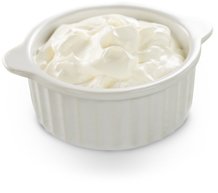
In 2010, Karl began making Cloumage, a velvety soft lactic cheese that can be used to jazz up a recipe that calls for crème fraîche, Mascarpone or Ricotta. The texture reminded Santos of a cloud, so he combined nuage (French for cloud),fromage and cloud to come up with Cloumage.
These cheeses saved the farm and exposed the world — well, at least the northeastern United States — to Hannahbells. Cloumage is readily available at Whole Foods and other specialty shops. It is also a favorite of many popular restaurant chefs, like Daniel Boulud and Tom Colicchio.
At Colicchio’s Upland in Manhattan, Chef Justin Smillie uses Cloumage in Smoked Salmon Pizza with sunflower sprouts and caper berries; and in his Whole Crispy Mushroom dish, which is a hen of the woods mushroom, flash-fried and placed over Cloumage with preserved lemon, chive, black pepper and salt.
Creamy, fresh Cloumage® from Shy Brothers Farm
“There are mainly two reasons I use Cloumage,” says Smillie. “I love the acidity of it and even more so the texture. I think what it brings to a dish is its lightness. It’s not too heavy and overwhelming.”
At Henrietta’s Table in Cambridge, MA, Chef Peter Davis is also sweet on Cloumage. He uses it in panna cotta and other desserts, as well as a baked French toast dish that resembles bread pudding with seasonal fruit. He says part of the appeal is its “tangy taste and smooth texture.”
Saving The Farm
The brothers’ paternal grandparents came to Massachusetts from Portugal and in 1947 built the Santos dairy farm on its present location, between two branches of the Westport River.
A decade ago, the farm’s third generation was finding it more costly to sell milk wholesale than to produce it. While milk sold for the same price, dairy costs rose. In 1995, there were 14 farms in Westport; by
the early 2000s, only two farms remained.
The entire farming community in Westport was also weakening. Karl Santos, a member of the Westport Agriculture Commission, met Hanley, a retired real estate development consultant who also wanted to help her adopted town. She was impressed with Santos and the farm and offered her business experience. Hanley and her husband, Leo Brooks, a retired commercial pilot, invested in the company and the future of Shy Brothers Farm. It turned out to be a worthy venture.
In 2006, Santos and Hanley looked into making cheese although neither of them had any experience. Today, cheesemaking is more than just a way to keep the farm going, says Santos, 51, who also makes Mozzarella. “We were born and raised on a farm. It’s a way of life, a tradition. I enjoy what I do. I’m a perfectionist no matter what I do. I like farming and making cheese is part of the farm.”
Karl Santos makes cheese with Barbara Hanley
A Cheese Course
Santos took weekend cheesemaking classes in New Hampshire and a two-week program at the University of Vermont. However, he says, the education is continuous. “I’m always learning. The milk changes and the environment changes, so there is always a challenge, and I like a challenge.”
Together with Hanley, he went to France to see how other farms made cheese. There he met with a consultant, who came to the U.S. for 10 days to teach Santos the procedure.
Then the surprises began. Santos entered Hannahbells Shallot flavor in the American Cheese Society’s competitions in 2009. When it won, “I just thought it was luck,” says Santos. Then, Hannahbells in the classic French flavor was recognized twice in 2010, by the ACS and the World Cheese Competition. Cloumage also won an ACS award in 2011.
“It’s hard to believe the cheeses have received so much recognition from chefs and the press,” says Santos.
The other brothers are happy to concentrate on farming and leave the cheesemaking to Karl. “I love working on the farm,” says Kevin, Karl’s twin. “It’s pretty cool our milk becomes a product that we know people like and is well-accepted. There is pride behind that.”
Norman Santos knows every cow and they all know him, says Hanley, who also handles the public relations for the cheesemaking business. Like their caretakers, the cows are also shy. “Strangers upset the cows,” she says. Hanley believes happy cows make better milk, which ultimately produces better tasting cheese. “The cows need stability and constancy. They need a calm and peaceful life.”
The barn at Shy Brothers Farm
Making Cheese
A cheesemaker is not a cheesemaker until they have been making cheese for a year, asserts Hanley. “It is a very sensory skill. It’s not like baking a cake where you have a definite amount of each ingredient. When you are making artisanal cheese, the cheese is constantly changing because the milk is constantly different,” she says.
Hanley likes the variations in the milk flavors, which are dependent on many factors. “When you get milk from a single herd, the milk is different every day,” unlike mass-produced milk. “When it is blended with milk from several herds and homogenized, it is the same every day. If the milk is short on fat, you add fat. If the milk needs more protein, you add protein. Our cheese is truly artisanal, coming from a single herd’s milk that changes each day. We add nothing to ‘correct’ the milk.”
However, with artisan cheeses, the milk’s flavor can vary according to the amount and quality of grass where the cows graze; the time of the year; the length of the day; the barometric pressure and relative humidity; and amount of rainfall. The taste and quality of the milk has a direct impact on the quality of the cheese.
“Milk is a living thing,” says Hanley. “It is not a known factor. It varies tremendously. But we know that contented cows make better milk.”
Since the cows are milked every 12 hours, Santos works long days during the week and sometimes on the weekend. He uses the same initial recipe for both Hannahbells and Cloumage. The difference is in the number of days for the affinage process and the texture at the end. Cloumage takes five days from pasteurization and culturing to packaging. Hannahbells are poured into tiny thimble-sized molds and aged an additional five days at 55 degrees. Both are stocked at 38 degrees.
“What is unique is the recipe,” he asserts. “The cold temperature draws the flavor out more.”
Aside from French and Shallot flavors, Hannahbells also come in Lavender Bud and Rosemary, and Chipotle can be special ordered. Each pairs with an array of food and drink. Often the darling on the cheese plate, Hannahbells pack a lot of zest in a tiny pop. Despite its diminutive size, Hanley says Hannahbells are not intended for kids, who may not appreciate its rich flavor, and the texture can be overwhelming in little mouths. On the other hand, “everyone loves Cloumage, even babies,” she says.
“Hannahbells are tasty, cute, fun and easy,” says Louis Risoli, fromagier at L’Espalier restaurant in Boston. “They make a real impression on a cheese plate; I place them at or near the beginning where one can really appreciate their subtleties. They have a permanent place on the L’Espalier cheese cart.”